by Hope Zvara | Aug 27, 2026 | Mental Health, Physical Health Benefits, Working With Hope

Image credit Unsplash
We’ve all heard about workplace wellness. For a long time, that mostly meant a discount on a gym membership or maybe some healthy snacks in the breakroom. Those are nice perks, but the conversation is changing. Today, a truly healthy work environment looks at the whole person, not just their physical fitness. It’s about ensuring company support aligns with both the team’s physical and mental health needs.
This shift recognizes that stress, burnout, and financial worries can hurt an employee’s well-being just as much as a sedentary lifestyle. When companies start to see wellness as an interconnected system, everyone benefits.
The Big Picture: What is Holistic Wellness?
To get a more complete picture of wellness, we need to look beyond basic health insurance. It’s about building a support system that touches many parts of a person’s life. This approach understands that an employee’s mental state, financial stability, and physical health are all deeply connected. For example, someone stressed about debt will likely have trouble sleeping, which then affects their focus and energy at work.
Designing holistic corporate wellness programs means thinking about these connections. It’s a move away from one-size-fits-all solutions and toward a flexible framework that gives people the specific support they need, when they need it. This could include anything from mental health resources to financial planning workshops.
Beyond the Basics: Weaving Mental Health into Benefits
One of the biggest changes in modern workplaces is how openly people discuss mental health. For too long, this was a private topic, but now, smart companies are making it a key part of their support structure. This means offering more than just a helpline number.
Truly supportive employee benefits now often include access to therapy, counseling services, and mental health apps at a reduced cost or free. Some employers are also training managers to help them spot signs of burnout and stress in their team members and respond with empathy. Normalizing conversations around mental health and providing real resources are powerful ways to show employees you care about their entire well-being, not just their output.
Physical Health Perks That People Actually Use
While the focus is expanding, physical health is still a cornerstone of wellness. The key is to offer options that are flexible, accessible, and genuinely appealing to your team. A standard gym membership is great, but it doesn’t work for everyone.
Consider offering a wellness stipend that employees can use for whatever activity suits them, whether it’s a yoga studio, a rock-climbing gym, or a series of kickboxing classes. On-site or virtual fitness classes can also build community and make exercise more convenient. Other popular options include sponsoring teams for local fun runs, hosting step challenges with small prizes, or providing ergonomic workstation assessments to prevent physical strain. The goal is to remove barriers and empower people to take care of their bodies in ways that feel good to them.
Financial Wellness as a Pillar of Health
Money is one of the biggest sources of stress for adults. When employees are worried about making ends meet, paying off student loans, or saving for retirement, that anxiety doesn’t just disappear when they clock in. This is why financial wellness has become a critical part of the holistic wellness conversation.
Companies can support their teams by offering resources that help them feel more in control of their finances. This can take many forms:
- Access to financial advisors for personalized guidance.
- Workshops on topics like budgeting, investing, and retirement planning.
- Student loan repayment assistance programs.
- A robust 401(k) plan with a company match.
By providing these tools, employers help reduce a major source of stress, which in turn positively affects an employee’s mental and physical health.
Creating a Culture That Breathes Wellness
Ultimately, even the best benefits package won’t work if the company culture doesn’t support it. If you offer flexible time off for mental health days but managers make people feel guilty for taking them, the policy is useless. True holistic employee wellness is built into a company’s daily operations.
This means encouraging employees to take their lunch breaks, respecting work-life boundaries by not sending emails after hours, and promoting open, honest communication. It’s about leaders modeling healthy behaviors themselves. When wellness is part of the culture, it becomes a shared value rather than just another corporate program.
Supporting your team’s overall well-being isn’t just kind; it’s a smart business decision. A healthy, supported, and balanced team is more engaged, creative, and resilient.

by Hope Zvara | Aug 19, 2026 | Physical Health Benefits, Self-Care, Wellness Wednesday, Working With Hope
Why Recovery Is the Missing Piece of Fitness
When most people think about getting healthier, they think about doing more.
More workouts.
More miles.
More weights.
More intensity.
More hustle.
As entrepreneurs, coaches, and high achievers, we’re conditioned to believe that success comes from constantly pushing harder. That same mindset often spills into our fitness routines, where we wear exhaustion like a badge of honor.
But here’s the truth I’ve learned through years of teaching movement and working with people at every stage of their wellness journey:
Your body doesn’t become stronger during your workout. It becomes stronger during recovery.
Movement creates the opportunity for change. Recovery is where that change actually happens.
If you’re always pushing but rarely pausing, you may be missing one of the most important pieces of your wellness puzzle.
Recovery Is Part of the Process
Many people think recovery means taking a day off because they’re tired.
In reality, recovery is an essential part of every healthy lifestyle.
Every workout creates small amounts of stress within your muscles and nervous system.
Recovery gives your body the opportunity to:
- Repair muscle tissue
- Restore energy
- Reduce inflammation
- Improve mobility
- Strengthen the immune system
- Support hormone balance
- Build resilience
Without recovery, your body stays in a constant state of stress.
Eventually, that catches up with you.
More Isn’t Always Better
Our culture celebrates being busy.
We often believe that if one workout is good, two must be better.
If we skip a rest day, we’ll make faster progress.
But constantly training without allowing your body to recover can actually slow your results.
Overtraining may lead to:
- Persistent fatigue
- Poor sleep
- Increased soreness
- Lower motivation
- Reduced performance
- Higher injury risk
- Weakened immune function
Progress doesn’t come from doing more.
It comes from finding the right balance.
Your Nervous System Needs Recovery Too
Recovery isn’t just physical.
Your nervous system works just as hard as your muscles.
Running a business, managing a team, raising a family, making decisions, and handling daily responsibilities all place demands on your nervous system.
When you’re constantly operating in “go mode,” your body struggles to fully recover.
That’s why true recovery includes calming your mind as much as restoring your body.
Practices like mindful breathing, meditation, gentle yoga, and spending time in nature help shift your nervous system into a state where healing can occur.
Sleep Is Your Greatest Recovery Tool
If I could recommend just one recovery habit, it would be prioritizing sleep.
Quality sleep supports nearly every function in the body.
During sleep, your body works to:
- Repair muscles
- Consolidate memory
- Balance hormones
- Strengthen immunity
- Regulate metabolism
- Restore mental focus
No supplement or workout can replace the benefits of consistent, quality sleep.
If you’re sacrificing sleep to be more productive, you may actually be working against yourself.
Active Recovery Counts
Recovery doesn’t always mean sitting still.
In fact, gentle movement often helps your body recover more effectively.
Active recovery may include:
- Walking
- Gentle yoga
- Stretching
- Mobility exercises
- Light cycling
- Using a vibration plate
- Deep breathing exercises
These activities improve circulation while reducing stiffness and supporting muscle recovery.
Movement can help your body heal.
Listen to What Your Body Is Telling You
One of the greatest wellness skills you can develop is learning to listen.
Your body often tells you exactly what it needs.
Signs you may need more recovery include:
- Constant soreness
- Feeling exhausted after workouts
- Trouble sleeping
- Irritability
- Lack of motivation
- Frequent illness
- Difficulty concentrating
These aren’t signs of weakness.
They’re signals asking for rest and restoration.
Nutrition Supports Recovery
What you eat after movement matters just as much as the workout itself.
Your body needs quality nutrients to rebuild and repair.
Focus on:
- Lean protein
- Colorful fruits and vegetables
- Healthy fats
- Whole grains
- Plenty of water
Fueling your body well helps maximize the benefits of your movement practice.
Recovery Builds Consistency
One of the biggest misconceptions about recovery is that it slows progress.
The opposite is true.
When you recover well, you’re able to:
- Exercise more consistently
- Prevent injuries
- Stay motivated
- Maintain higher energy
- Enjoy movement
Fitness isn’t about one incredible workout.
It’s about creating habits you can sustain for years.
Recovery makes consistency possible.
Wellness Is About Longevity
I don’t teach movement so people can survive one intense workout.
I teach movement so they can move well for life.
The goal isn’t to push your body until it breaks.
The goal is to care for your body so it continues supporting you for decades to come.
That requires recovery.
It requires slowing down enough to let your body catch up with all the good work you’re asking it to do.
Final Thoughts
Fitness isn’t just built in the moments when you’re moving.
It’s built in the moments when you’re resting, recovering, and allowing your body to heal.
Recovery isn’t lazy.
Recovery is productive.
It’s one of the most powerful investments you can make in your health, your energy, and your future.
So the next time you plan your workouts, don’t forget to schedule your recovery too.
Because lasting wellness isn’t created by doing more.
It’s created by doing what your body truly needs.
You May Also Like
1. Want to Start the Year with More Calm?
Read: The Hidden Power of Breathwork for Entrepreneurs
Internal link:
https://hopezvara.com/the-hidden-power-of-breathwork-for-entrepreneurs
Explore daily breathwork practices that gently regulate the nervous system.
External Resource:
https://www.health.harvard.edu/mind-and-mood/six-relaxation-techniques-to-reduce-stress
2. Ready to Lead Without Burning Out?
Read: From Burnout to Breakthrough: Wellness Habits That Actually Stick
Internal link:
https://hopezvara.com/from-burnout-to-breakthrough-wellness-habits-that-actually-stick
Discover habits that help entrepreneurs build sustainable energy and resilience.
External Resource:
https://www.apa.org/topics/stress
3. Curious How Intuition Supports Better Business Decisions?
Read: Why Intuition Is Your Most Underrated Business Tool
Internal link:
https://hopezvara.com/why-intuition-is-your-most-underrated-business-tool
Learn how nervous system safety improves clarity and instinct.
External Resource:
https://www.psychologytoday.com/us/basics/intuition
4. Want More Focus and Less Overwhelm?
Read: Creating a Morning Routine That Aligns With Your Purpose
Internal link:
https://hopezvara.com/creating-a-morning-routine-that-aligns-with-your-purpose
See how mindfulness brings balance to demanding leadership roles.
External Resource:
https://www.mindful.org
by Hope Zvara | Aug 12, 2026 | Core Functional Fitness, Physical Health Benefits, Small Business Tools & Solutions, Wellness Wednesday, Working With Hope
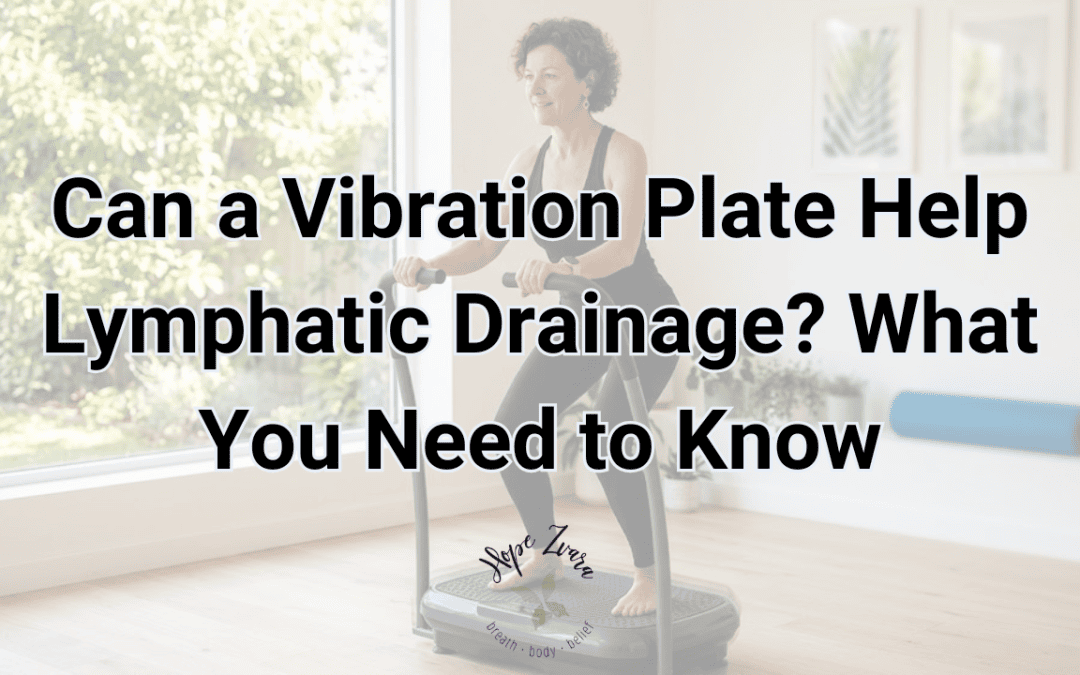
Can a Vibration Plate Help Lymphatic Drainage?
One of the most common questions I hear lately is:
“Can a vibration plate help with lymphatic drainage?”
It’s a great question because more people are beginning to understand how important the lymphatic system is for overall wellness.
Unlike your heart, which continuously pumps blood throughout your body, your lymphatic system doesn’t have its own pump.
Instead, it depends on movement.
Every time you walk, stretch, breathe deeply, or contract your muscles, you’re helping move lymphatic fluid throughout your body.
That’s where vibration plates have gained attention.
While they’re not a magic solution or a medical treatment, vibration plates can encourage gentle movement and muscle activation that may help support healthy lymphatic flow as part of an active lifestyle.
Let’s explore why.
What Is the Lymphatic System?
Your lymphatic system is an important part of your body’s immune and waste-removal systems.
It helps:
- Transport lymph fluid
- Remove waste products
- Support immune function
- Maintain healthy fluid balance
- Carry infection-fighting white blood cells
Unlike the circulatory system, the lymphatic system relies primarily on body movement to keep fluid flowing efficiently.
That’s one reason regular movement is so important.
Why Movement Matters
Think about how your body feels after sitting all day.
You may notice:
- Stiffness
- Swelling
- Fatigue
- Low energy
Movement helps wake your body back up.
As muscles contract and relax, they gently assist lymphatic circulation throughout the body.
This is one reason I always say:
Movement is medicine.
It doesn’t have to be intense.
It simply has to be consistent.
How a Vibration Plate Works
A vibration plate creates gentle vibrations beneath your feet while you stand, perform exercises, or hold simple positions.
Those vibrations encourage your muscles to contract and relax many times each second.
This increased muscle activity creates movement throughout the body with very little impact on the joints.
For many people, especially beginners or those recovering from injury, that’s one of the biggest advantages.
Can It Support Lymphatic Drainage?
Research continues to explore the many benefits of whole-body vibration.
While a vibration plate isn’t designed specifically to “drain” the lymphatic system, the muscle activation and increased circulation it encourages may help support healthy lymphatic movement.
Many users report feeling:
- Less stiffness
- Better circulation
- Reduced feelings of heaviness
- Increased energy after movement
- Greater overall mobility
The key word is support.
A vibration plate works best when it’s part of an overall healthy lifestyle that includes movement, hydration, nutrition, and adequate recovery.
Benefits Beyond the Lymphatic System
One reason I enjoy using vibration plates is that they support multiple aspects of wellness at the same time.
Regular use may help improve:
- Balance
- Muscle activation
- Circulation
- Flexibility
- Stability
- Core engagement
- Recovery
- Daily movement
That’s a lot of benefit from just a few minutes a day.
Pair It With Simple Exercises
Standing on the vibration plate is beneficial, but adding gentle movement can increase muscle engagement even more.
Try exercises like:
- Mini squats
- Calf raises
- Gentle marching
- Balance exercises
- Light stretching
- Modified push-ups using the platform
- Standing yoga poses
You don’t need an advanced workout.
Small movements performed consistently often create the biggest improvements.
Hydration Still Matters
Supporting your lymphatic system isn’t only about movement.
Hydration plays an important role as well.
Drinking enough water helps your body maintain healthy fluid balance.
Whenever you’re increasing activity, make hydration part of your daily routine.
Movement and hydration work together.
Consistency Beats Intensity
One of the biggest mistakes people make is believing they need hour-long workouts.
The truth is, consistency almost always wins.
Five to fifteen minutes on a vibration plate several times each week can be far more beneficial than one long workout every few weeks.
Simple daily movement creates lasting habits.
Listen to Your Body
Every body is different.
Some people immediately enjoy using a vibration plate.
Others prefer to start slowly.
Pay attention to how your body feels and increase your activity gradually.
If you have a medical condition, recent surgery, are pregnant, or have concerns about whether whole-body vibration is appropriate for you, consult your healthcare provider before beginning a new exercise program.
Movement Supports Overall Wellness
It’s easy to look for one tool that solves every problem.
But wellness doesn’t work that way.
The healthiest lifestyle combines many simple habits, including:
- Daily movement
- Strength training
- Walking
- Stretching
- Deep breathing
- Good nutrition
- Hydration
- Quality sleep
- Stress management
A vibration plate can become one valuable part of that bigger picture.
Final Thoughts
So, can a vibration plate help lymphatic drainage?
It may support healthy lymphatic function by encouraging muscle activation, circulation, and regular movement-all of which are important for a healthy lymphatic system.
The greatest benefit isn’t the machine itself.
It’s the fact that it helps you move.
And every time you move your body, you’re investing in your health.
Remember, wellness isn’t about finding one perfect solution.
It’s about building simple habits that help your body function at its best every day.
You May Also Like
1. Want to Start the Year with More Calm?
Read: The Hidden Power of Breathwork for Entrepreneurs
Internal link:
https://hopezvara.com/the-hidden-power-of-breathwork-for-entrepreneurs
Explore daily breathwork practices that gently regulate the nervous system.
External Resource:
https://www.health.harvard.edu/mind-and-mood/six-relaxation-techniques-to-reduce-stress
2. Ready to Lead Without Burning Out?
Read: From Burnout to Breakthrough: Wellness Habits That Actually Stick
Internal link:
https://hopezvara.com/from-burnout-to-breakthrough-wellness-habits-that-actually-stick
Discover habits that help entrepreneurs build sustainable energy and resilience.
External Resource:
https://www.apa.org/topics/stress
3. Curious How Intuition Supports Better Business Decisions?
Read: Why Intuition Is Your Most Underrated Business Tool
Internal link:
https://hopezvara.com/why-intuition-is-your-most-underrated-business-tool
Learn how nervous system safety improves clarity and instinct.
External Resource:
https://www.psychologytoday.com/us/basics/intuition
4. Want More Focus and Less Overwhelm?
Read: Creating a Morning Routine That Aligns With Your Purpose
Internal link:
https://hopezvara.com/creating-a-morning-routine-that-aligns-with-your-purpose
See how mindfulness brings balance to demanding leadership roles.
External Resource:
https://www.mindful.org

by Hope Zvara | Jul 29, 2026 | Lifestyle, Physical Health Benefits, Wellness Wednesday, Working With Hope
Why Everyone Over 40 Should Own a Rebounder
Once we reach our 40s, our bodies begin sending us subtle messages.
You might notice your joints feel a little stiffer when you wake up. Recovery takes longer after a workout. Your energy isn’t quite what it used to be, and activities that once felt effortless now require a little more intention.
Here’s the good news.
Growing older doesn’t mean slowing down.
It simply means we need to become smarter about how we move.
One of my favorite wellness tools for staying active, protecting the body, and supporting long-term health is something surprisingly simple: a rebounder.
If you’ve never used one before, think of it as a mini trampoline designed specifically for low-impact exercise.
Don’t let its size fool you.
Rebounding is one of the most effective ways to improve your health without putting unnecessary stress on your joints.
Whether you’re an entrepreneur spending hours at a desk, a wellness professional serving others all day, or someone who simply wants to feel stronger and more energized, a rebounder may become one of the best investments you ever make.
What Is a Rebounder?
A rebounder is a small fitness trampoline designed for controlled movement.
Unlike recreational trampolines, rebounders are built to provide gentle, low-impact exercise that supports the entire body.
You don’t have to perform high jumps or complicated routines.
Even gentle bouncing provides incredible health benefits.
In fact, keeping one or both feet on the mat during movement is often enough to stimulate circulation, improve balance, and activate muscles throughout the body.
Why Movement Changes After 40
Our bodies naturally experience changes with age.
Muscle mass gradually decreases.
Bone density begins to decline.
Joint mobility becomes more limited.
Recovery slows.
Metabolism changes.
These aren’t signs that movement should stop.
They’re signs that movement matters even more.
The key is choosing exercises that strengthen the body while protecting it.
That’s exactly what rebounding offers.
It’s Gentle on Your Joints
One of the biggest reasons people stop exercising is joint pain.
Running, jumping on hard surfaces, and repetitive impact can aggravate knees, hips, ankles, and lower backs.
A rebounder absorbs much of that impact, allowing your joints to move naturally without the pounding associated with many traditional workouts.
This makes rebounding an excellent option for adults who want effective exercise without unnecessary discomfort.
Supports Lymphatic Health
Unlike your heart, which has its own pump, your lymphatic system depends largely on movement to circulate fluid throughout the body.
Gentle bouncing creates changes in gravity that encourage lymphatic circulation.
Healthy lymph flow supports:
- Immune function
- Waste removal
- Reduced fluid retention
- Overall wellness
While rebounding isn’t a medical treatment, regular movement is an important part of maintaining a healthy lymphatic system.
Improves Balance and Coordination
Falls become a greater concern as we age.
Maintaining balance is one of the best ways to stay independent and active for years to come.
Rebounding challenges your stabilizing muscles in a safe, controlled environment.
Over time, this can improve:
- Coordination
- Body awareness
- Core stability
- Confidence during everyday movement
Better balance benefits every area of life.
Builds Strength Without Heavy Weights
Many people assume strength training requires lifting heavy weights.
While resistance training is valuable, rebounding also activates muscles throughout the body.
Every bounce engages your:
- Core
- Legs
- Glutes
- Back
- Arms
- Stabilizing muscles
The result is a full-body workout that feels enjoyable rather than intimidating.
Increases Energy Naturally
If you’ve ever found yourself reaching for another cup of coffee during the afternoon, your body may simply be asking for movement.
One of the quickest ways to increase energy is by increasing circulation.
Just five to ten minutes of gentle rebounding can leave you feeling refreshed, focused, and mentally clear.
Movement creates energy.
That’s one of the simplest truths I’ve learned throughout my years of teaching wellness.
Supports Bone Health
As we age, maintaining bone strength becomes increasingly important.
Weight-bearing exercise plays a valuable role in supporting healthy bones.
Because rebounding combines gentle impact with muscle engagement, it encourages the body to maintain strength while minimizing excessive stress on the joints.
Combined with proper nutrition and resistance training, rebounding can become an important part of a healthy lifestyle.
Reduces Stress and Clears the Mind
Movement isn’t only about physical health.
It also changes how we think and feel.
When life becomes overwhelming, our nervous system often needs movement before it needs more thinking.
A few minutes on a rebounder can help:
- Reduce stress
- Improve mood
- Increase mental clarity
- Encourage mindfulness
- Release physical tension
Sometimes the fastest way to quiet the mind is to move the body.
Perfect for Busy Entrepreneurs
One of the biggest barriers to exercise is time.
Entrepreneurs often tell me they don’t have an hour for the gym.
The beauty of a rebounder is that you don’t need one.
Five, ten, or fifteen minutes throughout the day can make a meaningful difference.
Keep it near your desk.
Take movement breaks between meetings.
Start your morning with gentle bouncing.
End your day with light movement to release stress.
Consistency always beats perfection.
Easy to Use at Home
Unlike many fitness machines, rebounders don’t require a dedicated workout room.
Most fit easily into a home office, living room, or spare bedroom.
Many models are lightweight and easy to move when needed.
Having fitness equipment that’s visible also increases the likelihood you’ll actually use it.
Sometimes removing barriers is the biggest key to building healthy habits.
Movement Is an Investment in Your Future
Too many people wait until pain appears before they begin caring for their bodies.
True wellness works the opposite way.
We move today so we can continue moving tomorrow.
Every bounce is an investment in:
- Better mobility
- More energy
- Improved confidence
- Stronger muscles
- Healthier aging
Small actions performed consistently always outperform occasional bursts of motivation.
Final Thoughts
Owning a rebounder isn’t about chasing youth.
It’s about supporting the body you have today while preparing for the years ahead.
After 40, movement becomes one of the most valuable forms of self-care available.
A rebounder offers a fun, accessible, and effective way to improve strength, balance, circulation, energy, and overall wellness without placing unnecessary stress on your joints.
You don’t need complicated workouts.
You simply need to keep moving.
Because the healthiest years of your life may still be ahead of you.
You May Also Like
Why Intuition Is Your Most Underrated Business Tool – Learn how intuitive leadership improves clarity and decision-making in complex environments.
🔗 https://hopezvara.com/why-intuition-is-your-most-underrated-business-tool
🌐 https://hbr.org/2022/03/how-to-stop-overthinking-and-start-trusting-your-gut
From Burnout to Breakthrough: Wellness Habits That Actually Stick – Explore how nervous system regulation supports sustainable leadership performance.
🔗 https://hopezvara.com/from-burnout-to-breakthrough-wellness-habits-that-actually-stick
🌐 https://www.mayoclinic.org/healthy-lifestyle/stress-management/basics/stress-basics/hlv-20049495
The Hidden Power of Breathwork for Entrepreneurs – Discover why breathwork is a foundational tool for regulated leadership.
🔗 https://hopezvara.com/the-hidden-power-of-breathwork-for-entrepreneurs
🌐 https://www.ncbi.nlm.nih.gov/pmc/articles/PMC6137615/
Creating a Morning Routine That Aligns With Your Purpose – Learn how intentional rituals support heart-centered leadership.
🔗 https://hopezvara.com/creating-a-morning-routine-that-aligns-with-your-purpose
🌐 https://www.psychologytoday.com/us/basics/habit-formation

by Hope Zvara | Jul 16, 2026 | Inspirational, Lifestyle, Physical Health Benefits, Working With Hope
Movement Is Medicine: Here’s Why
What if one of the most powerful tools for improving your health, reducing stress, and creating more energy wasn’t found in a bottle, a prescription, or an expensive program?
What if it was something your body was already designed to do?
Movement.
We often think of exercise as something we have to do to lose weight, stay fit, or check off another item on our never-ending to-do list. But movement is so much more than burning calories or building muscle.
Movement is medicine.
Not because it cures every illness, but because it supports nearly every system in your body. It improves circulation, regulates your nervous system, sharpens your focus, boosts your mood, and reconnects you to yourself.
As entrepreneurs, leaders, and busy professionals, we spend much of our day thinking. Planning. Solving problems. Sitting behind screens.
Our minds stay active while our bodies stay still.
Over time, that imbalance begins to affect everything from our creativity to our confidence.
The good news?
Your body already knows how to help you feel better.
Sometimes, all it needs is permission to move.
Your Body Was Designed to Move
Think about children for a moment.
They run.
They stretch.
They climb.
They dance without worrying about how they look.
Movement is natural.
As adults, however, we often replace movement with convenience. We sit for meetings, commute by car, work behind computers, and spend our evenings on the couch because we’re “too tired.”
Ironically, the less we move, the less energy we tend to have.
Movement isn’t something we earn after finishing work.
It’s something that helps us do our work better.
When you move your body regularly, you’re supporting the systems that allow you to think clearly, make better decisions, and show up fully in your life.
Movement Supports Your Nervous System
Many people assume stress lives only in the mind.
It doesn’t.
Stress lives in the body.
When your nervous system remains in a constant state of “go,” your body begins operating as though it’s always facing a threat.
You may notice:
- Tight shoulders
- Neck pain
- Shallow breathing
- Difficulty concentrating
- Fatigue
- Feeling overwhelmed
Mindful movement helps interrupt that cycle.
Whether it’s yoga, stretching, walking, or gentle mobility work, movement signals to your nervous system that you’re safe.
That shift allows your body to move from survival mode toward regulation and recovery.
When your nervous system feels supported, everything else becomes easier.
You Don’t Need an Intense Workout
One of the biggest misconceptions about movement is that it has to be difficult to matter.
It doesn’t.
Movement isn’t measured by how much you sweat.
It’s measured by how consistently you care for your body.
Some days movement might mean:
- A ten-minute walk outside
- Gentle yoga
- Stretching between meetings
- Dancing in your kitchen
- Taking the stairs
- Standing instead of sitting
Every bit counts.
The goal isn’t perfection.
The goal is consistency.
Movement Improves Mental Clarity
Have you ever noticed that your best ideas often arrive when you’re walking, gardening, or taking a shower?
That’s not a coincidence.
Movement increases blood flow throughout the body, including the brain.
It also gives your mind an opportunity to process information differently than when you’re sitting still trying to force solutions.
When you’re stuck on a business problem, a difficult conversation, or an important decision, the answer isn’t always to think harder.
Sometimes the answer is simply to move.
Many entrepreneurs experience breakthroughs during movement because their minds finally have room to breathe.
Your Body Stores More Than Muscle
Our bodies remember experiences.
Stress.
Fear.
Grief.
Joy.
Excitement.
Even when our minds have moved on, our bodies may still carry tension from experiences we’ve never fully processed.
This is one reason movement can feel surprisingly emotional.
A yoga pose may bring unexpected tears.
A walk in nature may create a deep sense of peace.
Stretching may release tension you didn’t realize you were holding.
Movement creates space for healing that words alone sometimes cannot reach.
Movement Builds Confidence
Confidence isn’t something you wait to feel.
It’s something you build through action.
Every time you choose to move your body, you’re reinforcing a powerful message:
“I matter.”
That choice creates trust.
Not only trust in your body but trust in yourself.
Over time, these small daily decisions begin influencing every other area of your life.
You become more willing to take risks.
More resilient when challenges arise.
More connected to your intuition.
Movement becomes a daily reminder that you’re capable of creating positive change.
Small Daily Choices Create Lasting Results
Many people delay movement because they believe they need an hour every day.
Life doesn’t always allow for that.
Fortunately, your body benefits from consistency far more than intensity.
Five minutes of stretching every morning.
A short walk after lunch.
Standing while taking phone calls.
Breathing deeply before opening your laptop.
These simple choices compound over time.
The healthiest lifestyles are rarely built through dramatic transformations.
They’re built through small, intentional habits practiced consistently.
Movement Helps You Lead Better
Leadership isn’t only about strategy.
It’s about presence.
Your energy affects every interaction you have.
When you’re exhausted, overwhelmed, or disconnected from your body, people notice.
When you’re grounded, calm, and energized, they notice that too.
Movement helps you become more present.
It improves emotional regulation.
It enhances patience.
It creates greater resilience during stressful situations.
Whether you’re leading a business, raising a family, coaching clients, or supporting a community, your greatest leadership tool is you.
Taking care of your body helps you take better care of everyone else.
The Mind-Body Connection Is Real
We often separate physical health from emotional wellness.
The truth is they’re deeply connected.
How you move influences:
- Your mood
- Your focus
- Your confidence
- Your resilience
- Your creativity
- Your relationships
When your body feels supported, your mind often follows.
Likewise, caring for your emotional health often inspires healthier physical choices.
Movement strengthens this connection.
It reminds us that wellness isn’t divided into separate categories.
It’s one integrated experience.
Movement Looks Different for Everyone
One of the most beautiful things about movement is that there’s no single right way to do it.
Your movement might be:
- Yoga
- Walking
- Hiking
- Swimming
- Dancing
- Strength training
- Gardening
- Stretching
The best movement is the one you’ll continue doing.
Forget comparison.
Forget perfection.
Choose movement that makes you feel alive.
When movement becomes enjoyable rather than another obligation, it naturally becomes part of your lifestyle.
Give Yourself Permission to Begin
Many people wait for Monday.
Or next month.
Or after things slow down.
But your body doesn’t need a perfect plan.
It simply needs your attention.
Start where you are.
Move how you can.
Celebrate consistency over intensity.
Remember that every step, every stretch, every breath, and every intentional movement is an investment in your future self.
Because movement isn’t punishment.
It isn’t another task to complete.
It’s one of the greatest gifts you can give yourself.
Final Thoughts
The phrase “Movement Is Medicine” isn’t about finding another fitness trend.
It’s about remembering something we’ve always known.
Our bodies were created to move.
When we move regularly and intentionally, we support not only our muscles and joints but also our minds, emotions, creativity, and resilience.
You don’t need to become an athlete to experience these benefits.
You simply need to begin.
One walk.
One stretch.
One deep breath.
One choice at a time.
Because every movement is an opportunity to reconnect with yourself, restore your energy, and create a healthier, more purposeful life.
You May Also Like
Why Intuition Is Your Most Underrated Business Tool – Learn how intuitive leadership improves clarity and decision-making in complex environments.
🔗 https://hopezvara.com/why-intuition-is-your-most-underrated-business-tool
🌐 https://hbr.org/2022/03/how-to-stop-overthinking-and-start-trusting-your-gut
From Burnout to Breakthrough: Wellness Habits That Actually Stick – Explore how nervous system regulation supports sustainable leadership performance.
🔗 https://hopezvara.com/from-burnout-to-breakthrough-wellness-habits-that-actually-stick
🌐 https://www.mayoclinic.org/healthy-lifestyle/stress-management/basics/stress-basics/hlv-20049495
The Hidden Power of Breathwork for Entrepreneurs – Discover why breathwork is a foundational tool for regulated leadership.
🔗 https://hopezvara.com/the-hidden-power-of-breathwork-for-entrepreneurs
🌐 https://www.ncbi.nlm.nih.gov/pmc/articles/PMC6137615/
Creating a Morning Routine That Aligns With Your Purpose – Learn how intentional rituals support heart-centered leadership.
🔗 https://hopezvara.com/creating-a-morning-routine-that-aligns-with-your-purpose
🌐 https://www.psychologytoday.com/us/basics/habit-formation
by Hope Zvara | Apr 24, 2026 | Core Functional Fitness, Physical Health Benefits, Self-Care, Working With Hope
Vibration Plate 101: The Complete Beginner’s Guide for Women Over 40
Feeling sluggish, stiff, or bloated as you navigate midlife? Struggling to find time for hour-long workouts that leave your joints aching? You’re not alone, and there’s a solution that’s changing the wellness game for women over 40.
Enter the vibration plate: a simple, low-impact tool that delivers real results in just 10 minutes a day. No jumping, no heavy weights, no complicated choreography. Just stand on it, move gently, and let the science do the work.
If you’ve been curious about vibration plates but don’t know where to start, this beginner’s guide will answer all your questions and show you exactly why this tool is perfect for women navigating midlife.
What Exactly Is a Vibration Plate?
A vibration plate (also called a whole body vibration platform) is a fitness device that produces rapid mechanical vibrations. When you stand, sit, or perform exercises on it, these vibrations travel through your body, causing your muscles to contract and relax automatically, without you having to consciously move.
The Three Main Types:
- Oscillating (Pivotal) Plates: The platform moves like a seesaw, one side up while the other goes down. This mimics natural walking and is gentler on the body. Best for lymphatic drainage and balance work.
- Lineal (Vertical) Plates: Both sides move straight up and down together, creating more intense muscle activation. Best for strength training and bone density.
- Tri-Planar (3D) Plates: Combines both movements for comprehensive benefits. Best for overall multi-purpose use.
For the lymphatic drainage and gentle toning routines at Hope Zvara, oscillating or tri-planar plates work best.
How Does a Vibration Plate Work?
When you stand on a vibrating platform, your body experiences the “tonic vibration reflex”, an automatic response where your muscles contract and relax rapidly to stabilize against the vibrations.
Here’s what happens:
- The plate vibrates 30-50 times per second
- Your muscles contract 30-50 times per second in response
- Compare that to conventional exercise: muscles contract 1-2 times per second
- Result: 15-50x more muscle contractions in the same time
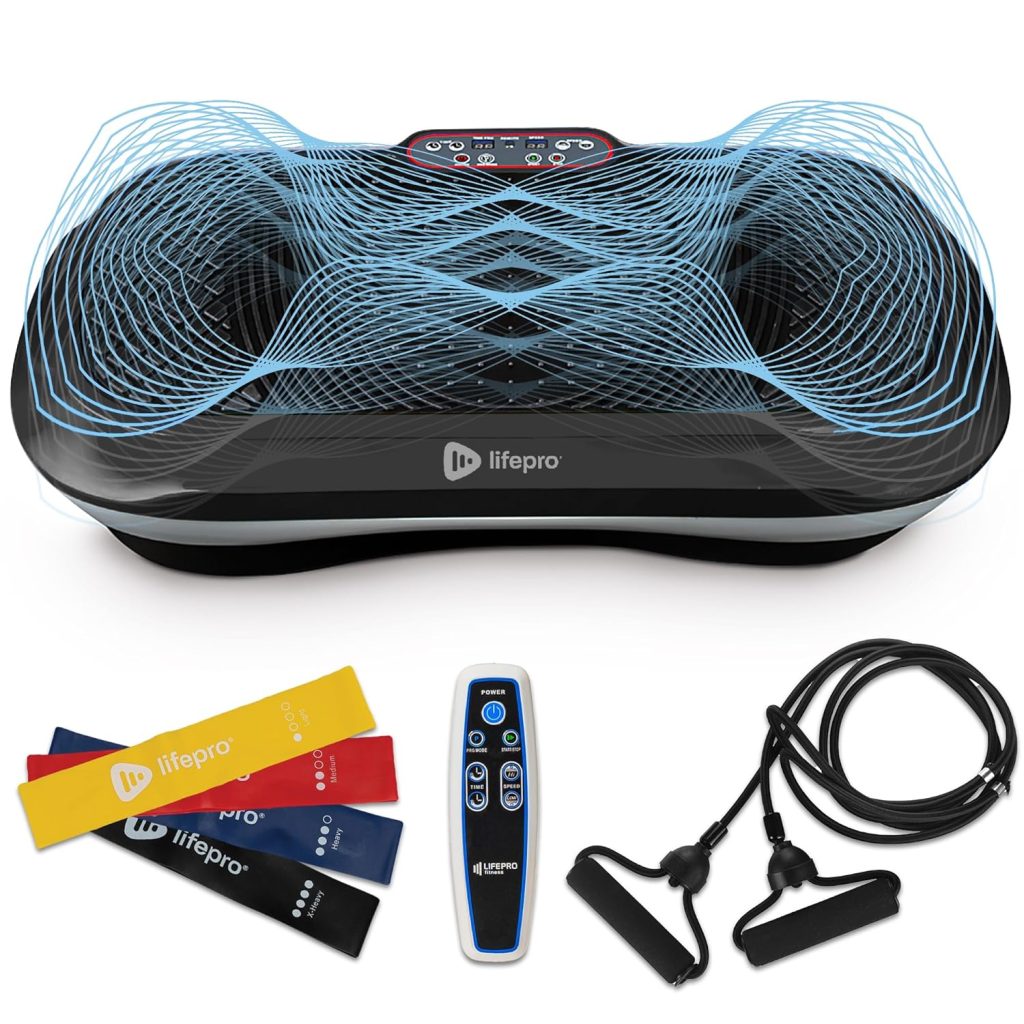
LifePro is a great Vibration Plate for everyday users. To check it out CLICK HERE
What This Means for You:
✅ More muscle activation in less time: Studies show vibration plates activate up to 95% of muscle fibers vs. 40% in regular exercise
✅ Enhanced circulation: Rapid contractions pump blood through vessels more efficiently
✅ Lymphatic stimulation: Your lymphatic system has no pump, it relies on muscle movement. Vibration plates provide that automatically
✅ Low joint impact: All the muscle work without pounding your knees, hips, or back
Why Vibration Plates Are Perfect for Women Over 40
Metabolism Slows Down
After 40, we lose 3-8% of muscle mass per decade. Since muscle burns calories at rest, this naturally slows metabolism. Vibration plates help maintain muscle without heavy lifting stress.
Hormonal Changes
Perimenopause and menopause bring fluctuating hormones, leading to increased belly fat, reduced bone density, more bloating, and decreased circulation. Vibration plates address all these simultaneously.
Joint Health Matters
High-impact exercise that worked in your 20s can cause pain in your 40s. Vibration plates deliver results without wear and tear.
Time Is Precious
Between careers, family, and self-care, who has 90 minutes for workouts? With vibration plates, 5-10 minutes is genuinely effective.
What to Expect: Realistic Timelines
First Session (Day 1)
- Tingling sensation (normal, your nerves responding)
- Slight muscle fatigue afterward
- Feeling energized or relaxed
- Start with 5 minutes at lower frequency (10-15 Hz) (level 1-5)
- Hydrate well before and after
First Week
- Less morning bloating and puffiness
- Improved sleep quality
- Possible mild muscle soreness
- More daily energy
First Month
- Visible reduction in fluid retention (face, hands, feet, legs)
- Improved mobility, less stiffness (especially when you wake up)
- Better balance
- Noticeable muscle tone improvements
3+ Months
- Measurable bone density improvements
- Body composition changes
- Enhanced vitality and well-being
- A new realistic wellness habit that you incorporate into your daily routine
Understanding Frequency and Amplitude
Frequency (Hertz/Hz)
How many vibrations per second:
- Low (5-15 Hz): Gentle, perfect for lymphatic drainage and recovery
- Medium (15-30 Hz): Balance of relaxation and muscle work
- High (30-50+ Hz): Intense muscle activation (some plates go higher than this, but be warned that higher frequencies can lead to injuries, discomfort or complications, more is not always better in this instance)
Hope Zvara routines: Typically 10-20 Hz for optimal lymphatic flow and gentle strengthening.
“My vibration plate works in “programs” so I tend to stay in program 1 or 2 which is about 15-50 Hz, anything more than that my legs feel agitated and get red and itchy, which is not in response to nerve stimulation or increase blood flow but rather a histamine response in my case”.
NOTE: if you experience persistent itching alongside dizziness or difficulty breathing or severe swelling, it is important to contact your doctor immediately and share your symptoms and timeline of what has been happening so they can further guide you.
Amplitude
How far the platform moves:
- Low (1-2mm): Subtle, gentle
- Medium (2-4mm): Moderate
- High (4-10mm): Very intense
Look for adjustable settings to customize based on your needs.
Safety First: Who Should Avoid Vibration Plates
Always consult your healthcare provider if you have:
❌ Pregnancy
❌ Pacemaker or implanted devices
❌ Recent surgery
❌ Blood clots
❌ Severe cardiovascular disease
❌ Epilepsy
❌ Kidney or gallstones
❌ Recent fractures or severe osteoporosis
Your First Routine: 5-Minute Beginner Protocol
Setup:
- Frequency: 10-12 Hz (low/gentle)
- Amplitude: low
- Feet hip-width apart, barefoot
- Soft knees (never locked)
- Core gently engaged
Pre-Routine: Always remember to open up your terminus and chalk points (or lymphatic fluid drainage points)
Collarbone → Neck → Armpits → Below The Corner Of The Jaw→In Front & Behind Ear → Base of Skull/Upper Neck→ Above Navel→ Groin→ Behind Knees → Elbows →Collarbone again
Routine:
- Simple standing (1 min): Breathe and feel the vibration (slight bent knees)
- Gentle knee bends (1 min): Small squatting motion
- Arm circles (1 min): Small circles forward, then back
- Torso twists (1 min): Gentle rotation, hands on hips
- Standing rest (1 min): Return to simple standing (slight bent knees)
After: Drink 8-16 oz water immediately.
The “Simple & Consistent” Approach (And Why It Works)
One of the biggest things I’ve learned is this: the best routine is the one you’ll actually stick with.
You do not need brutal workouts, endless sweat sessions, or complicated routines to feel results. With vibration plates, gentle movement done consistently often works better than going too hard once in a while.
That’s why beginner-friendly, realistic routines are so effective—especially if you want something sustainable.
📺 WATCH: Your Perfect Starting Point
https://youtu.be/mPavxtHlHF0
This routine is designed to support lymphatic drainage, circulation, gentle activation, and daily movement without overcomplicating anything. It’s especially great if you want a low-stress way to get started.
Try it 3–4 times this week. Many people notice they feel lighter, less sluggish, and more energized after just a few sessions.
Common Questions Answered
“Will it hurt?”
No. Some tingling is normal. If you feel pain, stop immediately.
“How is this different from regular exercise?”
Vibration plates are incredibly efficient for lymphatic drainage, circulation, and muscle activation, especially when traditional workouts aren’t feasible. They complement, not replace, other movement.
“Can I just stand on it?”
Yes! Even passive standing activates muscles. But adding simple movements increases benefits.
“How often should I use it?”
Start 3-4 times weekly. Build to 5-6 times. Daily is fine at moderate intensity.
“Best time to use it?”
- Morning: Reduces bloating, energizes
- Midday: Combats afternoon slump
- Evening: Calms nervous system, aids sleep
Consistency matters more than timing.
Building Your Practice
Phase 1: Foundation (Weeks 1-2)
- Duration: 5-7 minutes
- Frequency: 3-4 times weekly
- Focus: Get comfortable, basic movements
Phase 2: Consistency (Weeks 3-8)
- Duration: 10-15 minutes
- Frequency: 4-5 times weekly
- Focus: Varied movements, add resistance bands
Phase 3: Optimization (Weeks 9+)
- Duration: 10-20 minutes
- Frequency: 5-6 times weekly
- Focus: Combine with weights, target specific goals
Quick Energy Boost
📺 BONUS ROUTINE:
[EMBED VIDEO: “5-Minute Lymphatic Drainage Routine | De-Bloat, De-Puff & Boost Circulation Naturally”]
Perfect for busy mornings or quick energy boosts. Can be done on or off the plate.
What’s Next in This Series?
📖 NEXT UP: Blog 2 – Lymphatic Drainage & De-Bloating
Discover how vibration plates reduce bloating, puffiness, and fluid retention while supporting natural detox.
📖 Coming Soon:
- Blog 3 – Bones, Joints & Balance
- Blog 4 – Muscle Tone & Stress Relief
- Blog 5 – Buying Guide
- Blog 6 – Do’s and Don’ts
Ready to Get Started?
Your action steps:
- ✅ Try the Lazy Girl Routine 3 times this week
- ✅ Subscribe to Hope Zvara on YouTube for weekly guided routines
- ✅ Read Blog 2 for lymphatic drainage benefits
- ✅ Drink plenty of water before and after sessions
- ✅ Be patient and consistent
Remember: Consistency beats intensity. Ten minutes daily will transform how you feel.
Subscribe to Hope Zvara on YouTube for:
- Weekly 10-minute vibration plate routines
- Lymphatic drainage workouts
- Functional fitness for women over 40
Disclaimer: This information is for educational purposes only and not medical advice. Always consult your healthcare provider before starting any new exercise program, especially with pre-existing conditions, pregnancy, or health concerns. Individual results may vary.
About Hope Zvara:
Hope Zvara empowers women over 40 with accessible wellness practices focusing on lymphatic health, functional fitness, and healthy aging. Her YouTube channel features guided routines combining vibration plates, yoga, mobility work, and strength training for midlife wellness.
